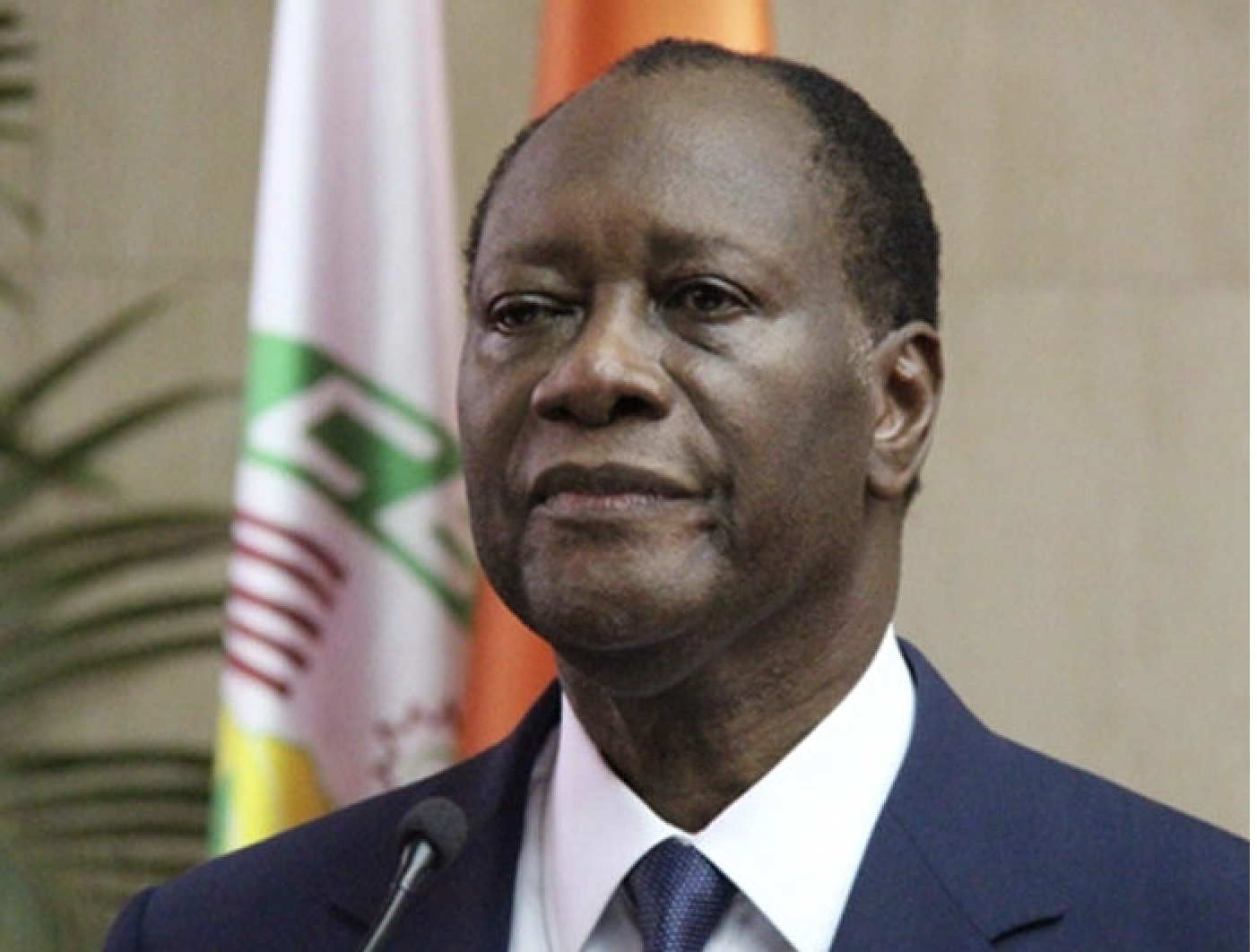
Abidjan, Ivory Coast – October 3, 2025: As Ivory Coast approaches its October 25 presidential election, President Alassane Ouattara has consolidated power through a systematic campaign that critics argue represents a dangerous erosion of West African democracy. The government’s latest ban on public demonstrations, implemented to prevent protests against the exclusion of key opposition figures, underscores a troubling pattern of authoritarian drift that echoes colonial-era suppression tactics.
The Constitutional Council’s final candidate list reveals the extent of this democratic manipulation. Former Credit Suisse CEO Tidjane Thiam, who led the main opposition Democratic Party of Ivory Coast (PDCI), was disqualified over dual nationality technicalities despite renouncing his French citizenship earlier this year. Former President Laurent Gbagbo, ex-Prime Minister Guillaume Soro, and Charles Blé Goudé were similarly barred, leaving only five candidates approved from 60 applications. This systematic exclusion has prompted thousands to take to Abidjan’s streets with banners declaring “Enough is enough!” and “No true democracy without true justice”.
France’s Neocolonial Shadow Looms Large
The current crisis cannot be divorced from Ivory Coast’s neocolonial relationship with France, which installed Ouattara through military intervention in 2011. As one Revolutionary Communist Party of Ivory Coast leader noted, “France is closely watching over the upcoming elections in October in its former colony, to ensure its protégé, President Alassane Ouattara, does not lose”. Despite recent announcements about French troop withdrawals, the fundamental military agreements dating to 1961 remain intact, ensuring France’s continued ability to intervene when its interests are threatened.
This French backing becomes particularly relevant when examining the exclusions of opposition figures. Laurent Gbagbo, who championed pan-Africanist policies and challenged French economic dominance, was literally “bombed out of office by the French military in 2011”. His current exclusion, alongside other sovereignty-minded politicians, suggests a calculated effort to prevent any challenge to the neocolonial order that has enriched French corporations while keeping Ivorians dependent on foreign powers.
The timing of these exclusions coincides with growing regional sentiment against French influence, as evidenced by military governments in Mali, Burkina Faso, and Niger severing ties with Paris. Ouattara’s government appears determined to maintain Ivory Coast as France’s last major foothold in West Africa, even at the cost of democratic legitimacy.
Regional Contagion and Geopolitical Stakes
The electoral manipulation in Ivory Coast occurs within a broader context of democratic backsliding across West Africa, where military coups have swept through Mali, Burkina Faso, Niger, and Guinea. This regional instability has created a volatile environment where rumors of coups spread rapidly on social media platforms, as demonstrated by false claims about military takeovers in Ivory Coast that circulated in May 2025.
China’s massive investments in Ivory Coast—estimated at $7.5 billion with bilateral trade reaching $1.57 billion by 2020—add another layer of geopolitical complexity. As China’s largest trading partner in the region, Ivory Coast represents a crucial gateway for Beijing’s African strategy.
The exclusion of opposition candidates has drawn criticism from ECOWAS, the African Union, and international observers who fear a repeat of the 2010-2011 crisis that killed over 3,000 people. Yet these regional bodies appear powerless to enforce democratic norms, particularly as their own legitimacy has been undermined by the withdrawal of Alliance of Sahel States members.
The stakes extend beyond Ivory Coast’s borders. As security analyst Joseph Siegle noted, the country’s ability to conduct credible elections “will significantly affect regional stability, economic integration, and the broader struggle between democratic governance and authoritarian alternatives across Africa”. The systematic exclusion of opposition voices signals to other African leaders that constitutional manipulation and judicial weaponization can ensure indefinite rule.
At 83, Ouattara’s pursuit of a fourth term—enabled by his 2016 constitutional amendments—represents the kind of leadership entrenchment that has fueled military interventions across the region. His justification that “experienced leadership” is needed to address security challenges rings hollow when his own governance failures have contributed to regional instability and youth disillusionment.
As opposition leader Pascal Affi N’Guessan warned, “He’s divided Ivorians, he imprisons people day in and day out, has destroyed our relations with the sub-region, he’s truly become a problem for Côte d’Ivoire”. With peaceful protest now banned and legal avenues exhausted, the question remains whether Ivorians will accept this orchestrated election or seek alternative means to reclaim their democratic rights. The answer will determine not only Ivory Coast’s future but the trajectory of West African democracy itself.
