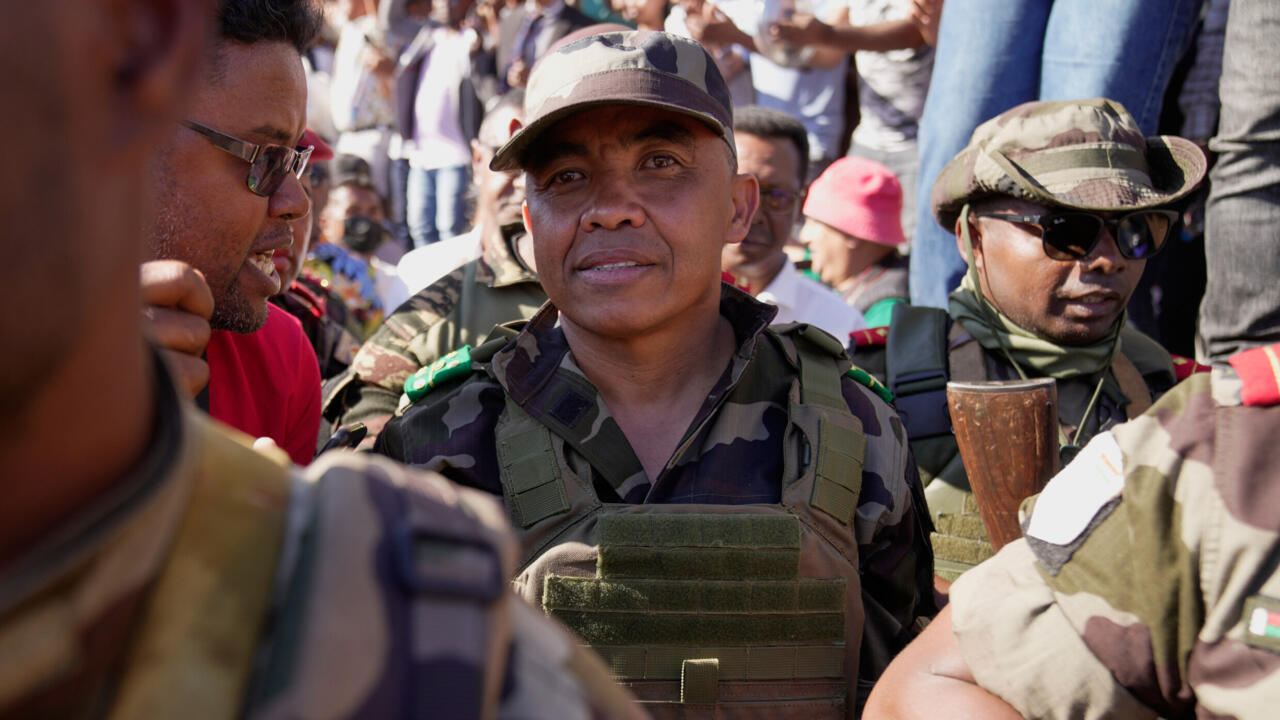
Addis Ababa, Ethiopia – October 16, 2025: The African Union suspended Madagascar from the continental body on Wednesday following a military takeover that ousted President Andry Rajoelina, but beneath the predictable institutional response lies a far more revealing story about sovereignty, neocolonial management, and the contradictions of youth-led revolutions on the African continent.
The suspension—issued “with immediate effect until constitutional order is restored”—follows the AU’s established protocol for unconstitutional government changes, joining Mali, Burkina Faso, Niger, Guinea, and Gabon on the continental body’s growing list of suspended members. Yet the Madagascar crisis reveals fault lines that expose not just internal political failures, but the persistent shadow of French influence over one of Africa’s largest island nations and the complicated relationship between genuine popular uprisings and military opportunism.
Colonel Michael Randrianirina, the 51-year-old military officer who led the October 14th takeover, is set to be sworn in as interim president on October 18th during a ceremony before Madagascar’s High Constitutional Court. His rise from relative obscurity to national leadership within three weeks encapsulates the speed and volatility characterizing contemporary African political transitions—and the questions they raise about who truly controls power when governments fall.
France’s Coordination of a Political Exit
What distinguishes Madagascar’s military takeover from recent West African coups is the sophisticated French crisis management that appears to have shaped the transition. While youth protesters filled Antananarivo’s streets demanding basic services, electricity, and an end to corruption, France evacuated President Rajoelina aboard a French military Casa aircraft on October 13th following reports of direct communications between Rajoelina and French President Emmanuel Macron.
French President Emmanuel Macron visited Madagascar in April 2025—the first visit by a French president in 20 years—announcing agreements in energy, digital technology, infrastructure and tourism. During that visit, Macron stated: “France remains one of Madagascar’s main economic partners, with bilateral trade exceeding one billion euros annually over the past three years, and I am very proud of that”.
France maintains significant strategic interests in the region. Réunion Island, located approximately 680 kilometers east of Madagascar, hosts French military forces including about 2,000 regular troops, two Floréal-class frigates, and serves as France’s third-largest naval base. This proximity enables rapid French response to crises in Madagascar.
During his April 2025 visit, Macron expressed interest in “developing supply chains and forming a partnership in rare earths and critical minerals” between France and Madagascar, noting that Madagascar is Africa’s second-largest producer of nickel and graphite. Analysis from critical minerals experts indicates that French companies have involvement in Madagascar’s mining sector, though specific percentages of control are difficult to verify.
Yet Randrianirina’s public positioning challenges French cultural dominance. When BBC offered to interview him in French—one of Madagascar’s official languages—he responded: “Why can’t I speak my language, Malagasy?”. His rejection of what he called “glorifying the colonial tongue” resonates with protesters who view linguistic choice as political resistance.
Gen Z Uprising Meets Military Intervention
The protests that triggered Madagascar’s crisis began on September 25th with legitimate grievances. According to World Bank data from 2022, approximately 75 percent of Madagascar’s population lives below the poverty line. Chronic electricity and water outages disrupt daily life in a nation where only about one-third of the population has access to electricity.
The Gen Z Madagascar movement adopted a modified One Piece pirate flag as their symbol—featuring a Malagasy satroka hat instead of the traditional straw hat—connecting their struggle to global youth movements from Indonesia to Nepal. This digital organization enabled coordination across Madagascar’s urban and rural divide through social media platforms including TikTok, Facebook, and Instagram.
When CAPSAT—the elite Corps d’administration des personnels et des services administratifs et techniques—marched alongside protesters on October 11th, some in the crowds initially welcomed military support. But this raises the critical question facing Madagascar: whether CAPSAT answered the youth movement’s call for democratic change or appropriated it for institutional power consolidation.
CAPSAT’s history suggests caution is warranted. The same unit played a crucial role in the 2009 mutiny that helped bring Rajoelina to power by ousting President Marc Ravalomanana. Sixteen years later, they’ve removed the leader they helped install—positioning CAPSAT as Madagascar’s recurring political arbitrator.
The African Union’s suspension carries primarily symbolic weight. While the AU Peace and Security Council condemned the “unconstitutional change of government” and threatened targeted sanctions, the continental body’s limited enforcement capacity means suspension amounts to diplomatic isolation without guaranteed material consequences. Madagascar joins a growing list of suspended AU members where military governments have weathered international condemnation while consolidating domestic control.
Randrianirina has promised 18 to 24 months of transitional governance before elections. He stated that a military-led committee would govern alongside a transitional civilian government during this period. However, across Africa, military governments have frequently extended transition periods or created constitutional frameworks ensuring continued military influence.
Geopolitical Competition in the Indian Ocean
Madagascar’s strategic position makes its political stability relevant beyond its borders. China has invested over $1.2 billion through Belt and Road Initiative projects, including port modernization in Toamasina and mining operations for graphite and cobalt essential to battery production.
Russia has called for avoiding bloodshed while characterizing events as an “internal matter”—language similar to Russian responses following military coups in Mali, Burkina Faso, and Niger.
The United States, focused on Indo-Pacific strategy and critical minerals supply chains, maintains limited direct engagement but has strategic interest in Madagascar’s political trajectory. US-based Energy Fuels acquired the Toliara mining project in October 2024, which contains titanium, zirconium, rare earth, and radioactive minerals.
What makes Madagascar’s situation distinctive is that it represents a test case for whether genuine youth movements demanding democratic accountability can achieve lasting change, or whether they become vehicles for military institutions and foreign powers to renegotiate control while maintaining structural dominance. The Gen Z protesters who filled Antananarivo’s streets waving anime pirate flags and demanding freedom from corrupt governance now face the question confronting youth movements across the continent: can authentic popular demands for sovereignty translate into institutional transformation when military elites and external powers still shape political outcomes?
Madagascar’s suspended AU membership, France’s coordination of the ousted president’s evacuation, and Randrianirina’s anti-colonial rhetoric combined with institutional military backing all point toward a future where the forms of sovereignty exist while the substance remains contested. For Pan-African observers, Madagascar offers important lessons about the distance between revolutionary slogans and revolutionary change—and the persistent challenge of building genuinely independent African political systems.
As protesters in Antananarivo noted during the demonstrations, the critical question is whether CAPSAT will serve the people’s demands or use those demands to legitimize military authority. That question will determine whether Madagascar’s crisis becomes a story of democratic breakthrough or another chapter in Africa’s experience with military interventions that promise civilian rule while maintaining ultimate institutional control.
