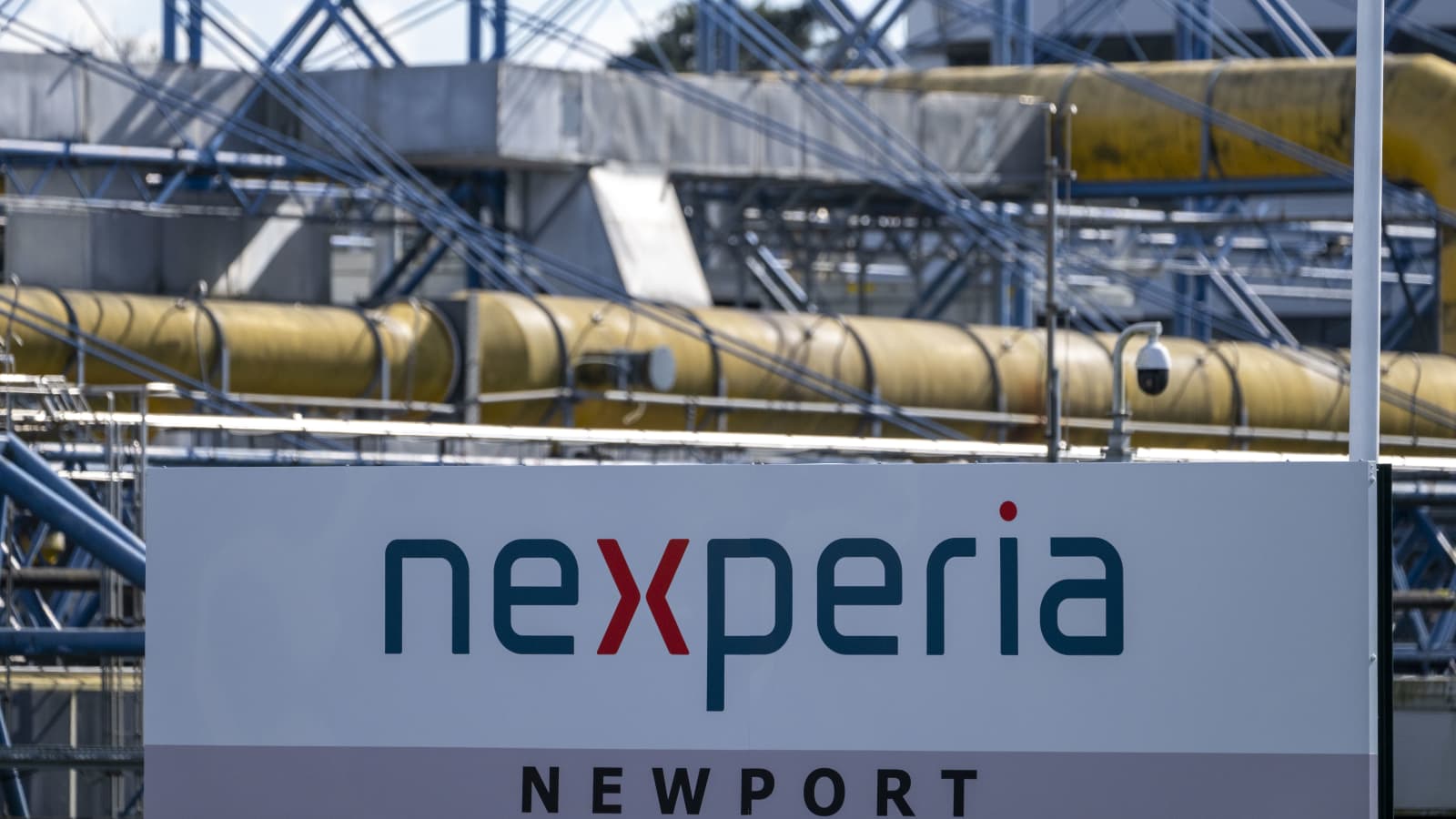
Lagos, Nigeria – October 13, 2025: The Dutch government has invoked the 1952 Goods Availability Act to place Nexperia, a semiconductor producer owned by China’s Wingtech, under temporary external management. Citing “serious governance shortcomings” and national security concerns, authorities suspended Nexperia’s Chinese CEO, appointed an independent non-Chinese director with decisive voting rights, and transferred nearly all company shares to a court-appointed custodian.
On September 30, 2025, the Ministry of Economic Affairs enacted the Goods Availability Act, a law originally designed to ensure essential supplies during emergencies, to intervene at Nexperia’s European operations. The Enterprise Chamber of the Amsterdam Court of Appeal confirmed on October 7 that Chairman and CEO Zhang Xuezheng was suspended from all executive positions and a third-party trustee now controls all but one of the company’s shares, effectively limiting Wingtech to economic benefits only.
Dutch officials framed the move as “highly exceptional,” emphasizing the need to protect advanced semiconductor capabilities critical to Europe’s automotive and electronics sectors. Wingtech’s share price plunged by the daily maximum of 10% on the Shanghai Stock Exchange following the announcement.
This decision follows China’s tightening of export rules on five rare earth elements on October 8, which are vital to chip fabrication and high-tech applications. Major European suppliers, including ASML, have warned of production delays as a result. China’s new restrictions require global buyers to obtain approval before importing materials containing Chinese rare earths.
For Africa—which supplies a significant share of global critical minerals—the Dutch action underscores competing demands from China and Europe. African producers of cobalt, lithium, and other inputs remain largely bound to export-only models, supplying raw materials to foreign processors. While the EU develops its Critical Raw Materials Act to diversify supply, most value-added processing continues to occur abroad, limiting technology transfer to African nations.
The seizure of Nexperia reveals broader challenges in achieving digital sovereignty. African countries rely heavily on foreign technology firms for both hardware and infrastructure. An estimated 80% of Africa’s internet traffic is routed through data centers outside the continent, exposing national data to external jurisdiction. Efforts by the African Union to build local capacity through its Digital Transformation Strategy have made only gradual progress, hampered by limited investment in on-shore manufacturing and data infrastructure.
Nigeria illustrates this dynamic: despite large silica sand deposits suitable for wafer production and a burgeoning tech sector, industrial facilities for chip fabrication remain nonexistent. Past proposals to mine lithium or cobalt have often proceeded without requirements for downstream manufacturing, reinforcing extraction-focused partnerships.
As global tech rivalry intensifies, African policymakers face a strategic crossroads: they must negotiate for genuine value addition and local capacity rather than only exporting raw materials. Failure to do so risks consigning the continent to a peripheral role in the high-value semiconductor ecosystem, even as emergency powers in Western capitals reshape the rules of technology control.
When major powers deploy wartime-era laws to secure strategic technologies, Africa’s path to digital sovereignty depends on securing real partnerships that link resource wealth to industrial and technological development on the continent.
