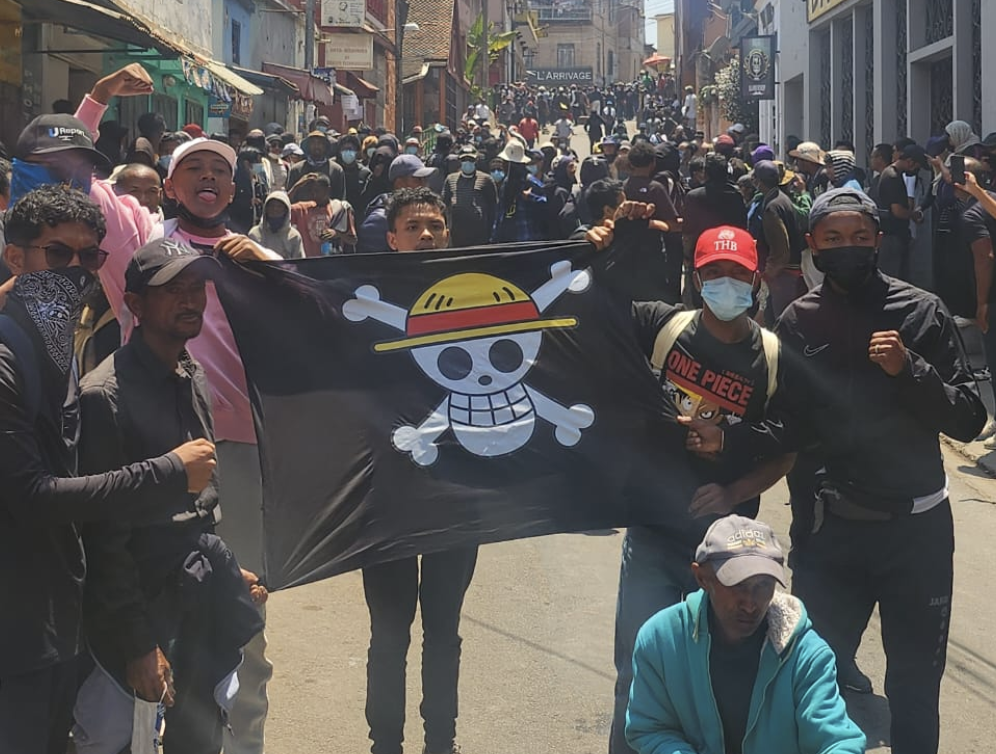
Antananarivo, Madagascar – October 4, 2025: President Andry Rajoelina remains defiant as Madagascar’s Generation Z protesters continue their unprecedented uprising against his government, with the embattled leader now claiming external forces are orchestrating what he calls an attempted “coup” to destabilize his administration. Despite dissolving his cabinet on September 29, Rajoelina has refused to resign, escalating tensions with youth activists who have sustained nearly two weeks of demonstrations demanding his departure.
The crisis began on September 25 when thousands of young Madagascans took to the streets of Antananarivo, initially protesting chronic power outages lasting up to 12 hours daily and water shortages that have crippled the capital. What started as demonstrations against basic service failures has evolved into a broader challenge to Rajoelina’s legitimacy, with protesters adopting symbols from global youth movements and demanding comprehensive political reform.
Digital Warfare and Foreign Influence Claims
In a Friday Facebook livestream, Rajoelina made explosive allegations about the protests’ origins, claiming “countries and agencies paid for this movement to get me out, not through elections, but for profit to take power like other African countries”. His administration has accused unnamed foreign actors of launching a “massive cyberattack” and “targeted digital manipulation campaign” to exploit Madagascar’s youth.
Foreign Minister Rasata Rafaravavitafika alleged the operation “was initially directed from abroad by an agency with advanced technological capabilities,” claiming “opportunistic groups” had “infiltrated” the protests. These accusations echo a familiar pattern across Africa where governments facing popular uprisings invoke foreign interference to delegitimize domestic opposition.
The timing of these claims is particularly significant given Madagascar’s complex geopolitical position. Since independence from France in 1960, the island has experienced repeated political crises marked by external manipulation. The current protests occur against the backdrop of intensifying competition between traditional colonial powers and emerging global actors for influence across the Indian Ocean region.
French connections to Madagascar remain deeply entrenched despite formal decolonization. France maintains strategic interests in the disputed Scattered Islands and has historically intervened in Madagascan politics, including during the controversial 2009 coup that first brought Rajoelina to power. Former President Marc Ravalomanana had explicitly accused France of orchestrating his overthrow, claiming Paris sought to “re-colonize Madagascar” after he expelled the French ambassador and moved closer to US and Chinese partnerships.
Pan-African Youth Movement Transcends Borders
The Madagascar uprising represents part of a broader wave of Generation Z mobilization across Africa, with protesters explicitly drawing inspiration from successful youth movements in Kenya, Nepal, and Bangladesh. The “Gen Z Madagascar” movement, organized primarily through Facebook and TikTok, has adopted symbolic elements from these international campaigns, including the skull-and-crossbones emblem from Japanese anime “One Piece” that has become synonymous with anti-establishment youth protests globally.
This transnational solidarity reflects a new form of Pan-African consciousness, where young Africans bypass traditional political structures to coordinate resistance against corrupt governance. As one student activist told media, “Madagascar is on an island, we don’t really know what’s going on outside of it and thankfully, with social media we know that in fact, we can if we want to, and it’s also thanks to Nepal which influenced us and in turn Madagascar has inspired others”.
The movement’s digital-first organization challenges conventional notions of sovereignty and political mobilization across Africa. While Rajoelina frames this connectivity as foreign manipulation, protesters view it as authentic solidarity between oppressed young people demanding accountability from failed leadership.
Economic Crisis Exposes Structural Failures
Madagascar’s crisis extends far beyond temporary service disruptions. Despite vast natural resources including rare earth minerals coveted by global powers, 75% of the country’s 30 million people live below the poverty line. The state-owned utility Jirama has become a symbol of institutional dysfunction, with World Bank reports documenting widespread corruption, 35% system losses, and a debt-to-asset ratio of 160%.
Recent corruption convictions of Jirama executives, including ten-year sentences for embezzling public funds while citizens endured blackouts, have further inflamed public anger. The company’s financial collapse represents broader governance failures that have persisted across multiple administrations, with international donors struggling to implement sustainable reforms due to entrenched political resistance.
Chinese mining companies have established significant operations in Madagascar’s extractive sectors, though their impact remains limited compared to other African nations. Beijing deployed its first military attaché to Madagascar in 2021 and has expressed interest in the strategic Diego Suarez naval base, previously used by France. However, local pushback has constrained Chinese ambitions, with several projects abandoned due to community opposition.
The African Union and Southern African Development Community have called for restraint and dialogue, though their response has been notably muted compared to previous Madagascan crises. This tepid regional reaction reflects broader challenges facing continental institutions in addressing youth-driven uprisings that transcend traditional diplomatic frameworks.
As protesters issue a 24-hour ultimatum demanding Rajoelina’s “favorable response” to their demands, Madagascar faces a critical juncture that could reshape its political trajectory. The outcome will likely influence similar movements across the continent, where young Africans increasingly reject both domestic elite capture and external manipulation in favor of authentic self-determination.
The crisis ultimately exposes the limitations of formal sovereignty when governments fail to provide basic services to their citizens. As one protester declared, “We represent an angry people who can no longer be manipulated” – a sentiment that resonates far beyond Madagascar’s shores across a continent where youth populations demand genuine freedom from both colonial legacies and contemporary forms of exploitation.
