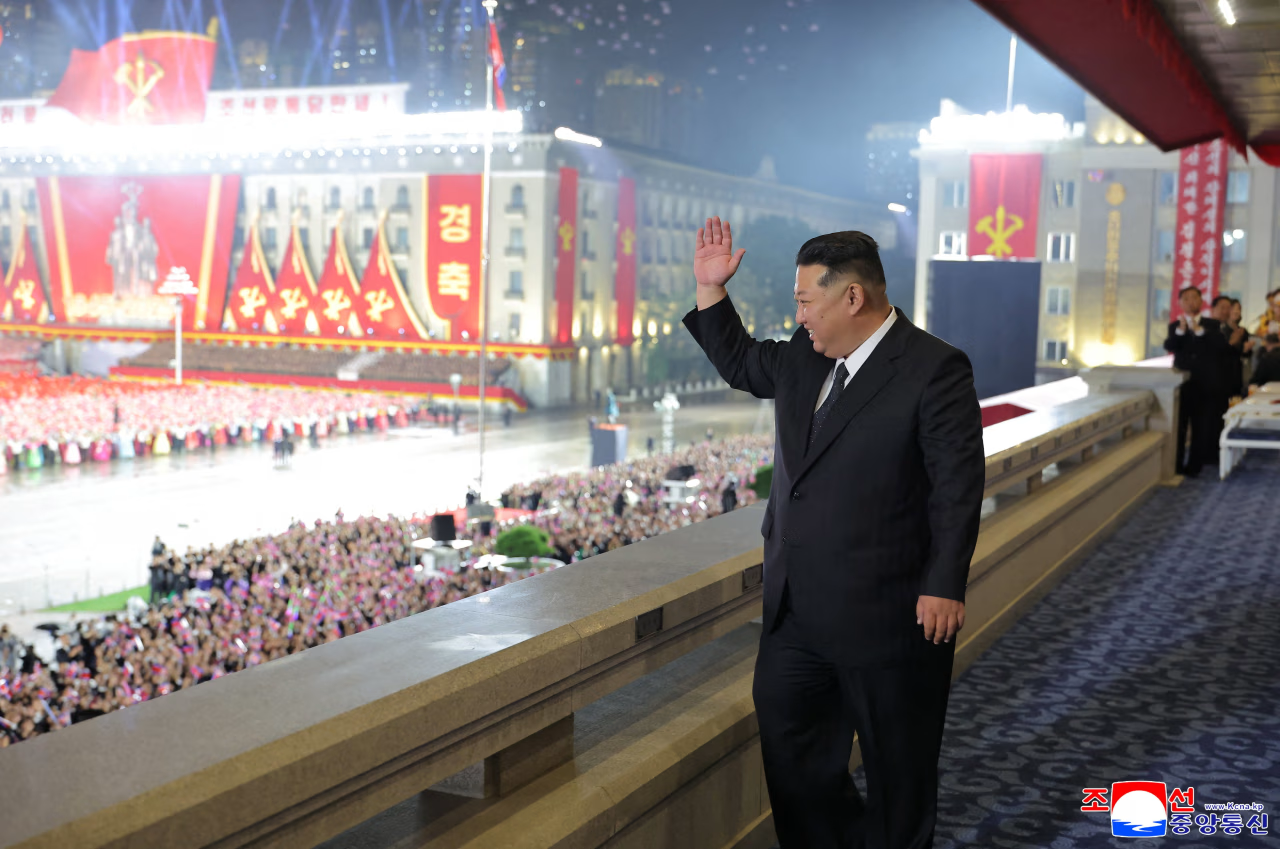
Lagos, Nigeria – October 11, 2025: North Korea’s unveiling of its most powerful nuclear weapon system at a military parade attended by senior Chinese, Russian, and Vietnamese officials signals far more than another provocative display from Pyongyang. The debut of the Hwasong-20 intercontinental ballistic missile during Friday’s ceremony marking the 80th anniversary of the Workers’ Party represents a critical moment in the emerging multipolar world order that challenges Western hegemony and has profound implications for African sovereignty.
The spectacle in Kim Il Sung Square showcased not just military hardware, but the consolidation of an alternative power structure that includes North Korea, Russia, China, and Vietnam—all united in their resistance to what they characterize as Western dominance. Russian Security Council Deputy Chairman Dmitry Medvedev’s prominent presence alongside Chinese Premier Li Qiang and Vietnamese Communist Party General Secretary To Lam at the parade underscored the depth of this alliance, with Medvedev explicitly praising North Korean soldiers fighting alongside Russian forces in Ukraine.
For Africa, this moment crystallizes a pattern that has been building for decades. Despite comprehensive United Nations sanctions, numerous African nations have maintained diplomatic and economic relationships with North Korea, driven by what analysts describe as historical solidarity, practical necessity, and frustration with Western approaches to nuclear disarmament.
Africa’s Complex Relationship with North Korea’s Nuclear Ambitions
The African continent’s response to North Korea’s nuclear program reveals deep fractures in the international order that Western powers often overlook. While traditional Western allies condemn Pyongyang’s actions, many African nations have chosen a different path—one rooted in their own experiences with international sanctions and nuclear policy.
Several African countries have maintained relationships with North Korea despite UN sanctions. Burkina Faso, which suspended diplomatic relations with North Korea in 2017 to comply with UN Security Council sanctions, announced in March 2023 that it would resume diplomatic ties with Pyongyang. This decision reflects the broader security challenges facing the West African nation under Captain Ibrahim Traoré’s leadership as it seeks to diversify its partnerships in the fight against terrorism.
Historical ties between North Korea and African nations run deep. During the Cold War, North Korea supported African liberation movements, creating lasting goodwill that persists today. Countries like Tanzania, Uganda, Angola, and Zimbabwe have maintained various forms of cooperation with North Korea, ranging from medical services to infrastructure projects.
UN Panel of Experts reports have identified numerous African countries as potential violators of North Korea sanctions, including entities in South Africa, the Democratic Republic of the Congo, Eritrea, Somalia, Uganda, and Nigeria. However, enforcement remains challenging, with limited resources for port inspections and complex investigations hampering effective implementation.
The Multipolar Moment: China, Russia, Vietnam and the New Order
Kim Jong Un’s speech at Friday’s parade, declaring North Korea a “faithful member of socialist forces” and “a bulwark for independence” against Western hegemony, resonates with a growing chorus of Global South leaders who view the current moment as an opportunity to reshape international relations. The presence of high-ranking officials from China, Russia, and Vietnam at the parade was not merely ceremonial—it represented the visible manifestation of what experts call the “multipolar world order”.
Chinese Premier Li Qiang’s attendance marked the first visit by a Chinese premier to North Korea since 2009, underscoring Beijing’s growing strategic partnership with Pyongyang. Meanwhile, Vietnamese Communist Party General Secretary To Lam’s presence represented the first visit by Vietnam’s top leader to North Korea in nearly two decades, highlighting Hanoi’s multilateral diplomatic approach.
This new configuration poses fundamental challenges to the Western-dominated system that has governed international relations since World War II. BRICS, which has expanded to include Egypt and Ethiopia alongside existing member South Africa, represents a significant portion of global GDP and is actively promoting alternatives to dollar-dominated financial systems.
For African leaders, this multipolar moment offers unprecedented opportunities. The expansion of BRICS to include more African nations reflects growing South-South cooperation and a desire to create what officials describe as “a fairer world order” that encompasses “voices of countries in the Global South”.
The unveiling of the Hwasong-20 ICBM—described by experts as capable of carrying multiple nuclear warheads and designed to potentially overwhelm existing U.S. missile defense systems—represents more than military advancement. According to the Carnegie Endowment for International Peace, the system “represents, for the moment, the apotheosis of North Korea’s ambitions for long-range nuclear delivery capabilities”.
The timing of North Korea’s nuclear display, coming as African nations increasingly assert their sovereignty through partnerships with China and Russia, reflects broader shifts in global power dynamics. From infrastructure investments through China’s Belt and Road Initiative to security cooperation agreements with Russia, African nations are demonstrating that they will no longer accept being relegated to the periphery of global decision-making.
As Kim Jong Un declared to the thousands gathered in Pyongyang’s central square, “Today, we stand before the world as a mighty people with no obstacles we cannot overcome and no great achievement we cannot accomplish”. For many in the Global South, particularly in Africa, these words echo their own aspirations for true sovereignty and self-determination in an increasingly multipolar world.
The international community’s response to this display will determine whether the emerging multipolar order leads to greater global representation or deeper fragmentation. What is certain is that the traditional Western-dominated order faces unprecedented challenges, and Africa—with its vast resources, young population, and growing economic power—will play a central role in shaping whatever comes next.
