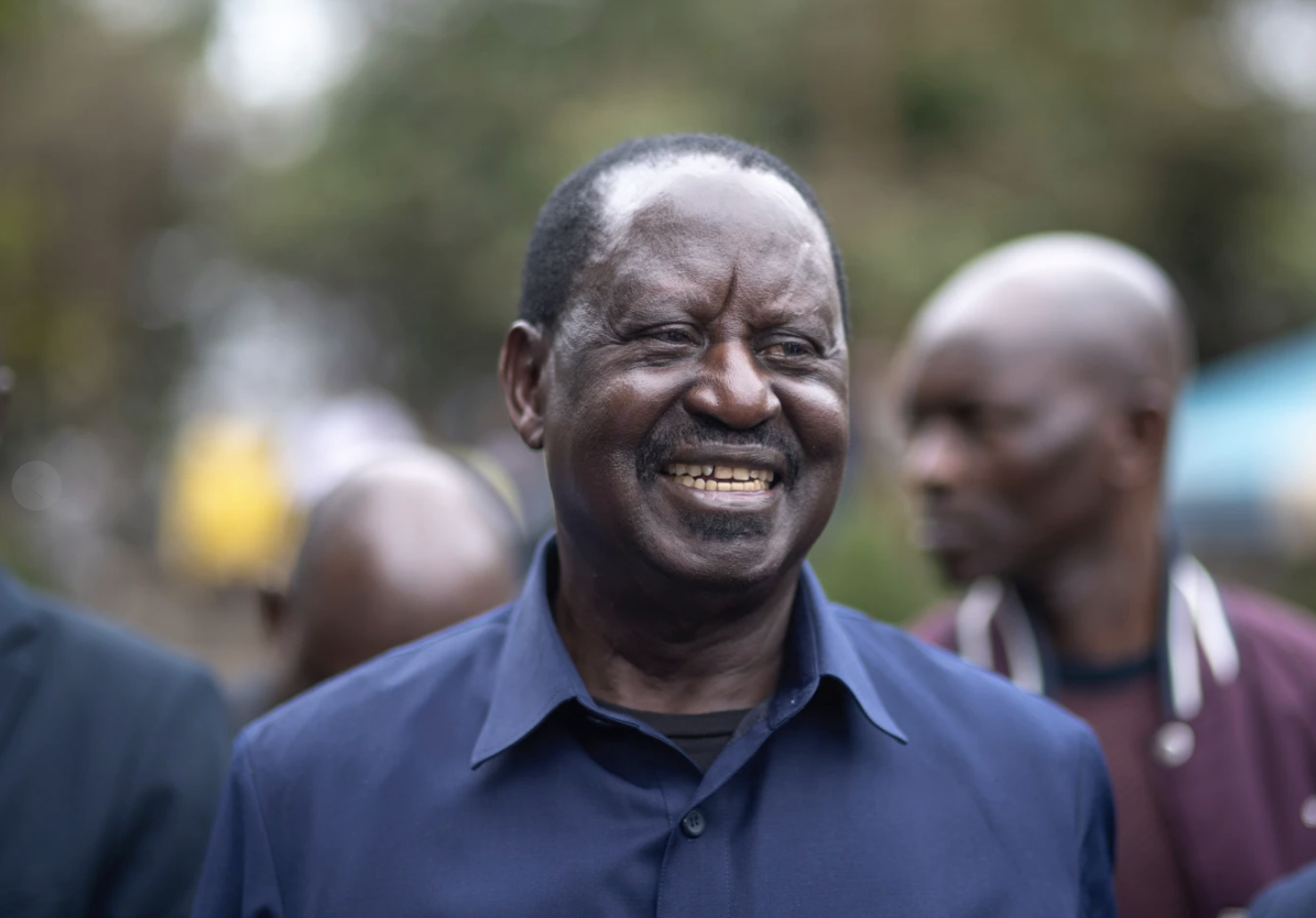
NAIROBI, Kenya — October 15, 2025: Raila Amolo Odinga, Kenya’s veteran opposition leader and former prime minister, died Wednesday at age 80 after suffering cardiac arrest during a morning walk in Kerala, India, where he had been receiving Ayurvedic treatment. His death marks the end of a five-decade political career that helped transform Kenya from single-party rule to multiparty democracy, while leaving unresolved questions about opposition leadership ahead of the 2027 elections.
Devamatha Hospital in Kerala State confirmed that Odinga collapsed around 7:45 a.m. local time and did not respond to resuscitation efforts. He was accompanied by his sister, daughter, personal physician, and security personnel from both India and Kenya when he suddenly fell during his walk at the Sreedhareeyam Ayurvedic Eye Hospital and Research Centre in Koothattukulam. Ben Agina, a senior adviser from Odinga’s 2022 presidential campaign, confirmed the death to The New York Times.
President William Ruto visited Odinga’s Karen residence to condole with the family. Indian Prime Minister Narendra Modi expressed condolences, describing Odinga as having “a special affection for India” and admiration for Ayurveda.
A Democracy Champion’s Complex Legacy
Born January 7, 1945, in Maseno, Kisumu County, western Kenya, Raila Odinga was the son of Jaramogi Oginga Odinga, Kenya’s first vice president after independence. His political awakening came through suffering—spending approximately six years in detention without trial during the 1980s under President Daniel arap Moi’s authoritarian regime after being accused of involvement in a 1982 coup attempt.
After studying mechanical engineering in East Germany, Odinga returned to Kenya in the 1970s, briefly teaching at the University of Nairobi before establishing a successful business manufacturing liquid petroleum gas cylinders. He entered parliament in 1992 as MP for Langata constituency, marking the beginning of a three-decade career as Kenya’s most recognizable opposition figure.
Odinga’s activism proved instrumental in achieving two of Kenya’s most significant democratic milestones: the restoration of multiparty politics in 1991 and the adoption of a new constitution in 2010. His supporters revered him as “Baba” (Father), “Agwambo” (the Enigma), and “Tinga” (Bulldozer)—a champion of democratic reform and social justice.
The 2007 Election Crisis and Its Aftermath
Odinga’s closest brush with the presidency came in 2007, when he narrowly lost to incumbent Mwai Kibaki in Kenya’s most disputed election. Official results showed Kibaki winning with 46.4% against Odinga’s 44.1%—a margin of just over 230,000 votes. The election was marred by irregularities that prompted even the electoral commission chairman to later admit uncertainty about the true winner.
The disputed results triggered Kenya’s worst post-election violence since independence. Over approximately two months, ethnic clashes killed between 1,000-1,300 people and displaced an estimated 300,000-600,000 Kenyans. The violence followed ethnic lines, with Luos and Kalenjins targeting Kikuyus, and Kikuyus organizing reprisal attacks.
Correcting the ICC Record
Contrary to claims in some accounts, Odinga himself was never charged by the International Criminal Court related to the 2007 violence. The ICC initially indicted six suspects: Uhuru Kenyatta, William Ruto, Joshua arap Sang, Henry Kosgey, Hussein Ali, and Francis Muthaura. All cases eventually collapsed due to witness intimidation and insufficient evidence, with no successful prosecutions.
Following international mediation led by former UN Secretary-General Kofi Annan, Odinga became prime minister in a unity government from 2008-2013. He subsequently ran unsuccessfully for president in 2013, 2017, and 2022, alleging electoral fraud in each contest.
The Controversial 2025 Political Deal
Odinga’s final political act proved contentious among his supporters. In March 2025, facing pressure from youth-led protests that had erupted in 2024 over taxation and governance issues, President Ruto co-opted Odinga’s Orange Democratic Movement (ODM) into a “broad-based government”. The deal saw four ODM leaders—Hassan Joho, Wycliffe Oparanya, John Mbadi, and Opiyo Wandayi—appointed to cabinet positions.
Public opinion polling showed growing opposition to the arrangement. A September 2025 TIFA Research poll found 64% of Kenyans opposed the broad-based government, more than double the 29% who supported it. Many young Kenyans who had protested government policies felt betrayed by Odinga’s decision to join the administration.
African Union Ambitions Dashed
Earlier in 2025, Odinga’s bid to become African Union Commission chairperson ended in defeat. In February voting in Addis Ababa, he lost to Djibouti’s Foreign Minister Mahamoud Ali Youssouf after multiple rounds of balloting. Odinga received 22 votes in the sixth round and subsequently withdrew from the race. The loss was seen as a significant blow to Kenya’s continental diplomatic ambitions.
Unresolved Succession Questions
Odinga’s death creates uncertainty for Kenya’s opposition ahead of the 2027 elections. The ODM party faces internal succession battles, with potential leaders including Governors Anyang’ Nyong’o of Kisumu, James Orengo of Siaya, Gladys Wanga of Homabay, and Nairobi Senator Edwin Sifuna. However, none possess Odinga’s unique ability to mobilize cross-ethnic coalitions or command national attention.
The fragmented opposition landscape includes impeached former Deputy President Rigathi Gachagua, lawyer Martha Karua, Wiper leader Kalonzo Musyoka, and other figures. But Ruto’s strategy of absorbing opposition leaders into government has weakened their structural capacity to mount effective challenges.
A Polarizing Final Chapter
Academic and political assessments of Odinga’s legacy remain divided. Supporters remember his sacrifices for democracy, including years in detention and his role in constitutional reform. Critics point to his repeated “handshake” deals with the governments he once opposed, arguing these arrangements prioritized elite accommodation over genuine democratic change.
Thousands gathered at Odinga’s Karen residence and in his Kisumu stronghold to mourn, with some using whistles and car horns to express their grief. In Kisumu, resident Otien Akach, 75, told The New York Times: “The passing of Raila is the loss of a hero. His contributions to development and democracy are clear and will endure beyond his lifetime”.
Former Chief Justice David Maraga described Odinga as “a patriot, a pan-Africanist, a democrat” who made “significant contributions to democracy in Kenya and Africa”. Ethiopian Prime Minister Abiy Ahmed offered condolences, while the African Union Commission issued a statement expressing “profound sadness”.
As Kenya approaches the 2027 elections without its political enigma, the fundamental question remains whether opposition forces can unite behind genuine alternatives to address the country’s governance challenges, or whether elite political arrangements will continue to predominate over popular demands for accountability and economic justice.
President Ruto is expected to announce national mourning protocols and deliver a formal address on Odinga’s death. Odinga is survived by his wife, Ida Odinga.
