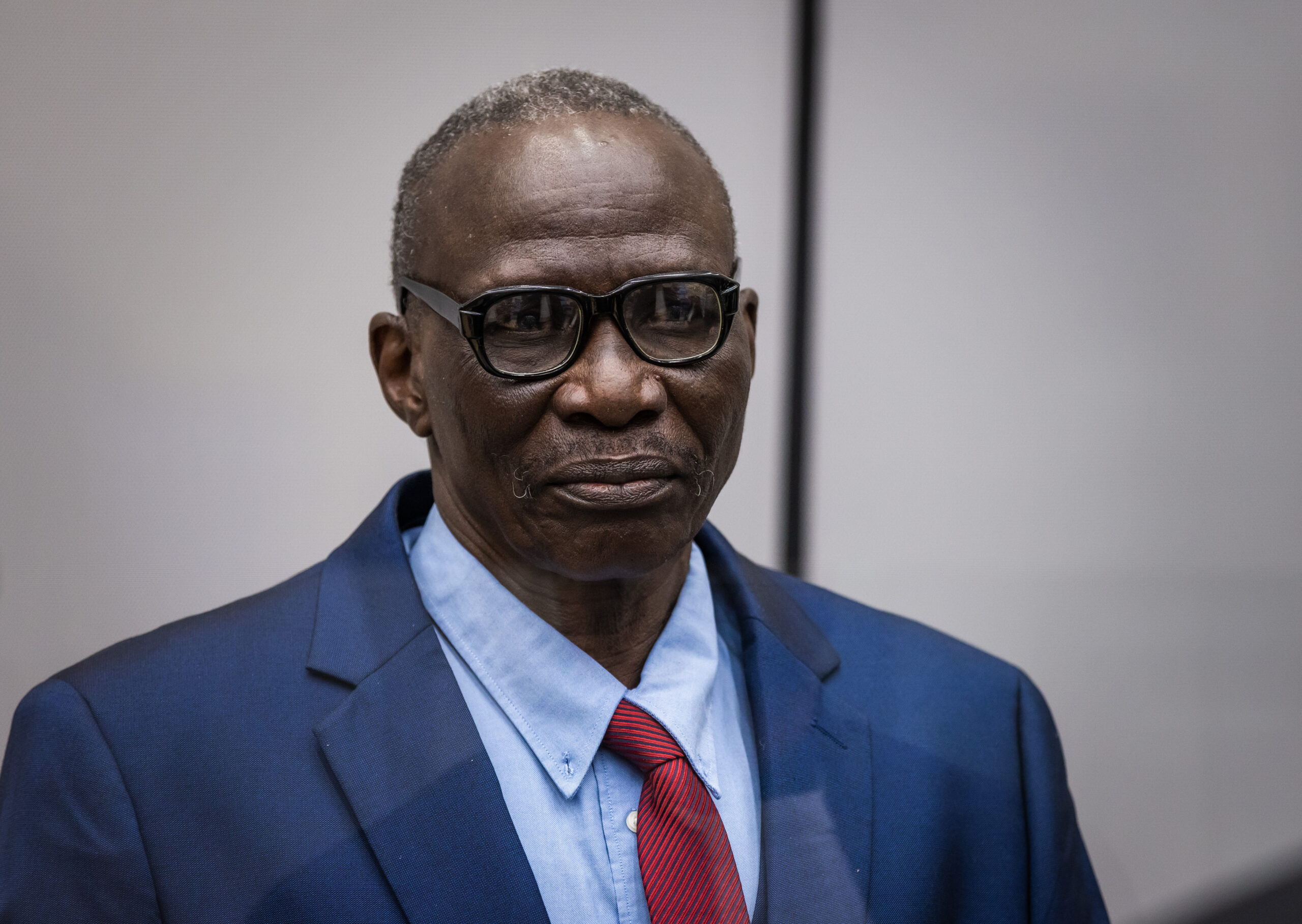
Lagos, Nigeria – October 6, 2025: The International Criminal Court delivered its first Darfur-related conviction today, finding former Janjaweed militia leader Ali Muhammad Ali Abd-Al-Rahman, known as Ali Kushayb, guilty of 27 counts of war crimes and crimes against humanity. The verdict represents both a milestone for victims and a damning indictment of international justice that took over two decades to materialize while similar atrocities continue across Sudan.
Judge Joanna Korner detailed harrowing accounts of mass executions, gang rapes, and systematic torture committed between August 2003 and April 2004. In one instance, Abd-Al-Rahman allegedly loaded approximately 50 civilians onto trucks, beating some with axes before ordering their execution. The three-judge panel unanimously rejected his defense that prosecutors had mistaken his identity.
Yet as survivors cautiously celebrate this long-awaited justice, the conviction exposes troubling questions about Western priorities and the selective nature of international accountability that has defined the ICC since its inception.
The Convenient Timing of Selective Justice
The conviction arrives as Sudan endures a brutal civil war that has killed tens of thousands and displaced over 12 million people. The same militias responsible for Darfur’s genocide have evolved into today’s Rapid Support Forces (RSF), which the United States finally designated as committing genocide in January 2025—twenty-one years after similar atrocities first ravaged the region.
This timing raises uncomfortable questions about international priorities. Why did it take over two decades to secure one conviction from a conflict that killed an estimated 300,000 people and displaced 2.7 million? The RSF, directly descended from the Janjaweed militias Abd-Al-Rahman once commanded, continues perpetrating identical crimes with impunity.
The transformation from Janjaweed to RSF illustrates how international inaction enables systematic violence. Under Omar al-Bashir’s regime, Arab militias were weaponized to crush non-Arab rebellions in Darfur. Rather than face accountability, these forces were legitimized and rebranded as the RSF under Mohamed Hamdan Dagalo (Hemedti) in 2013.
From Militia to Paramilitary: A Rebranding of Terror
Understanding today’s Sudan requires examining how genocidal militias transformed into state-sanctioned forces. The Janjaweed emerged from overlapping conflicts in Chad and Libya during the 1980s, with both countries arming Arab nomadic groups. By the 1990s, these militias conducted cross-border raids, but the violence primarily stemmed from land and water disputes between farmers and pastoralists.
The 2003 Darfur rebellion changed everything. When non-Arab communities complained of systematic discrimination and took up arms against Khartoum’s Arab-dominated government, al-Bashir’s regime responded with scorched-earth tactics. The Janjaweed became instruments of ethnic cleansing, attacking villages at dawn on horseback and camelback.
By 2013, these same militias were formalized as the RSF. Today, the RSF controls vast gold mining operations and receives backing from the United Arab Emirates while continuing ethnic cleansing campaigns. The US Treasury sanctioned seven RSF-owned companies based in the UAE alongside Hemedti himself in January 2025.
Western Double Standards and the Africa Question
The Kushayb conviction illuminates persistent criticisms that the ICC disproportionately targets African leaders while ignoring Western war crimes. Since inception, the vast majority of ICC defendants have been African, prompting accusations of neocolonial justice.
In 2017, the African Union backed a strategy for collective withdrawal from the ICC, though the resolution proved largely symbolic. Nigeria, Senegal, Cape Verde, and other states entered formal reservations against withdrawal. The “strategy” didn’t actually call for mass departure but instead demanded reforms to address AU concerns about sovereignty and bias.
Critics point to mass atrocities by Western powers—including American torture programs in Afghanistan and CIA operations—that have faced no ICC scrutiny. The court authorized an Afghanistan investigation in 2020 that could include US personnel, but the matter remains under consideration. The US is not an ICC member and has never ratified the Rome Statute.
The Accountability Paradox
The selective nature of international justice becomes stark when examining Omar al-Bashir’s case. Despite ICC warrants for genocide and crimes against humanity issued since 2009, the former president traveled freely to numerous countries without arrest. He was ultimately toppled not by international justice but by domestic uprising in 2019.
Current reports on al-Bashir’s whereabouts vary. He was moved from Kober prison during fighting in April 2023, initially to a military hospital in Khartoum. More recently, in September 2024, he was reportedly transferred to Merowe hospital approximately 450 kilometers north of Khartoum for medical treatment.
Ahmed Haroun, another ICC indictee, was released during the prison break and has allegedly mobilized former regime supporters to fight alongside the army. This demonstrates how impunity enables continued violence while international justice remains toothless against those who orchestrated genocide.
The RSF’s Financial Networks
Recent investigations reveal the RSF’s sophisticated financial operations that enable continued atrocities. Documents obtained by Global Witness show the RSF maintains accounts at UAE banks, including the National Bank of Abu Dhabi, demonstrating financial autonomy from Sudan’s government.
The leaked documents reveal money flowing between RSF accounts and Tradive General Trading LLC, controlled by Hemedti’s brother Algoney Hamdan Daglo. In one document, the transfer purpose was described as a “transfer to sister company,” suggesting Tradive serves as an RSF front company.
This financial network, combined with UAE support and control over gold mines, has enabled the RSF to operate independently while perpetrating ethnic cleansing across Sudan. The January 2025 US sanctions targeted this network but came decades too late to prevent ongoing atrocities.
The Kushayb conviction represents both progress and a damning indictment of international priorities. After twenty-one years, one militia commander faces justice while the architects of ethnic cleansing remain free and their successors continue identical crimes with sophisticated international backing.
True accountability requires addressing the systematic failures that enabled Janjaweed militias to evolve into the RSF while maintaining impunity. Until international justice applies equally to all perpetrators—regardless of geopolitical considerations—such convictions will remain symbolic victories overshadowed by ongoing atrocities.
As one Darfur witness testified during the trial, Abd-Al-Rahman allegedly told fighters: “Repeat, repeat for these people. Maybe there are some that you have missed.” Today, his successors continue that same systematic violence while the international community delivers justice at a pace measured in decades rather than years.
