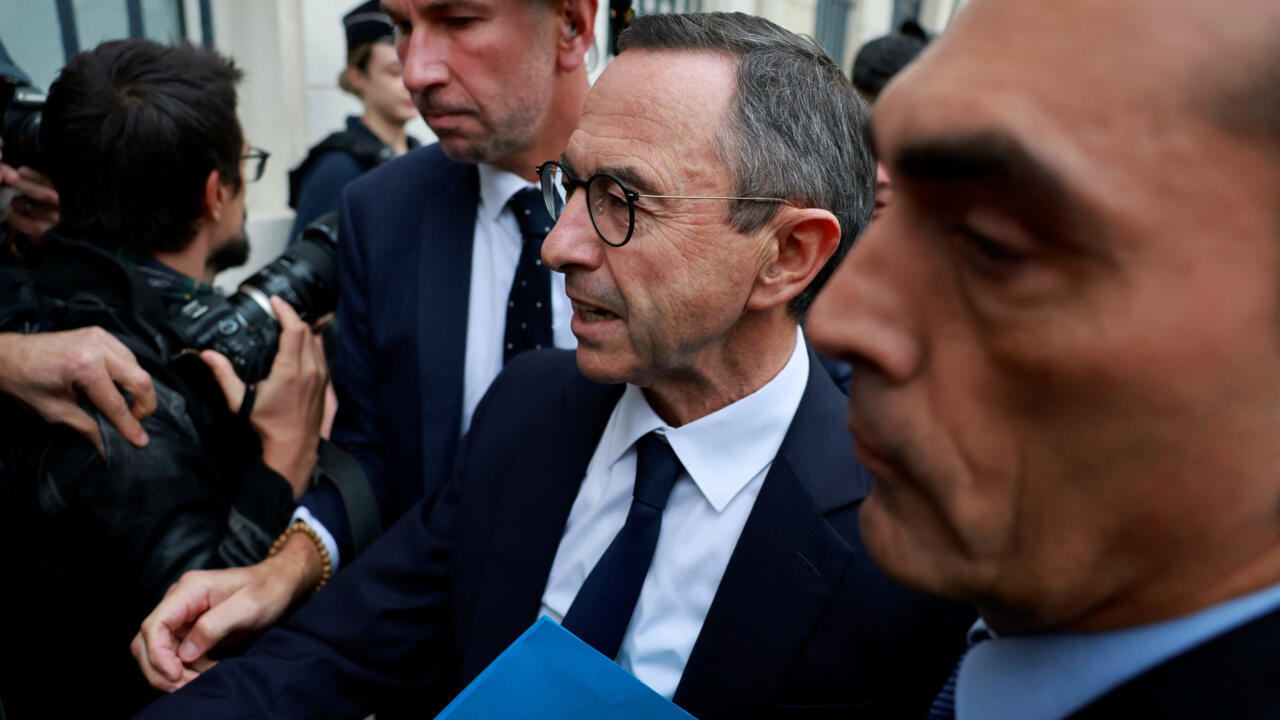
ABUJA, Nigeria – October 6, 2025: The dramatic resignation of French Prime Minister Sébastien Lecornu after just 27 days in office represents far more than European political theater—it signals France’s struggle to maintain economic stability as African nations finally reclaim their sovereignty over natural resources and financial systems.
Lecornu’s government collapsed within 14 hours of announcing his cabinet lineup, marking one of the most humiliating political failures in modern French history. While Western media frames this as domestic instability, the deeper reality connects directly to France’s crumbling neocolonial model as African partners sever decades-old extraction agreements.
France’s debt crisis—now at a staggering €3.35 trillion or 114% of GDP—coincides precisely with African nations reclaiming control over uranium mines, expelling French military bases, and demanding fair compensation for their resources. The timing is not coincidental.
The Uranium Lifeline Cut
Behind Lecornu’s hollow promises of parliamentary compromise lies an uncomfortable economic reality: France derives 70% of its electricity from nuclear power, and Niger alone supplied 15-20% of France’s uranium imports before the 2023 military coup. When Niger nationalized Orano’s operations and seized 1,500 tons of uranium stockpiles in 2024-2025, it delivered a crushing blow to France’s energy independence myth.
The numbers expose France’s vulnerability. Niger, despite being the world’s seventh-largest uranium producer with 4% of global output, received only €459 million annually while France generated €3.5 billion in value from Nigerien uranium. This exploitative arrangement—paying pennies while earning billions—epitomized the neocolonial extraction model that sustained French prosperity for decades.
France’s uranium dependency extends beyond Niger. The country imports from Kazakhstan (37%), Niger (20%), Namibia (16%), Australia (14%), and Uzbekistan (13%). However, Niger held strategic importance beyond mere percentages—French military sources confirmed that as recently as 2013, France’s nuclear weapons program relied entirely on Nigerien uranium.
When the Alliance of Sahel States—comprising Mali, Burkina Faso, and Niger—coordinated their expulsion of French forces and cancellation of mining agreements, they dismantled the foundation of France’s African policy. Chad and Senegal’s subsequent demands for French troop withdrawals confirmed that the era of Françafrique is ending.
The CFA Franc Financial Drain Exposed
France’s economic model historically depended on controlling 14 African countries through the CFA franc system, which until recently required these nations to deposit 50% of their foreign reserves in French banks. While 8 West African countries ended this requirement in 2021, the 6 Central African CFA franc countries still face this constraint.
This financial architecture enabled systematic wealth extraction. Studies revealed that for every dollar entering CFA countries as debt, 60 cents immediately flowed back to France through contracts, debt repayments, and profit transfers. France could purchase African resources below market price, then sell finished goods back to Africa at 20-30% above global rates.
The contrast with Germany is striking. Europe’s largest economy thrives without currency manipulation or forced reserve deposits, competing through innovation rather than exploitation. Germany’s success without neocolonial dependencies exposes the fundamental weakness of France’s extractive model.
Market Panic Reveals Structural Dependency
The immediate market reaction to Lecornu’s resignation—with the CAC-40 index plummeting 2% and French government bonds hitting monthly highs—demonstrates how financial markets understand France’s structural vulnerabilities. With debt servicing costs exceeding 7% of state spending and projected to reach unsustainable levels, France faces potential classification as Europe’s “problem child”.
The geopolitical implications extend beyond France’s borders. As African nations diversify partnerships with China, Russia, Turkey, and regional allies, they demonstrate that the Global South can chart independent paths without Western approval. Russia’s recent nuclear cooperation agreements with Mali, Burkina Faso, and Niger—including proposals to build Niger’s first nuclear power plant—represent direct challenges to French hegemony in the uranium sector.
Opposition leader Marine Le Pen’s immediate call for snap elections reflects the broader French establishment’s panic as they confront an existential question: Can France maintain its current living standards without African resource subsidies?. Lecornu’s 27-day tenure suggests the answer is increasingly negative.
African social media has responded with characteristic directness to France’s political meltdown. Niger’s leadership emphasizes that African resources will now serve African development first—a revolutionary concept that threatens the entire foundation of France’s economic model. As Burkina Faso’s President Ibrahim Traoré observed: “France exists today thanks to our ancestors. They should pray for us”.
French companies’ African operations face systematic restructuring. While some sources claim France extracts $500 billion annually from Africa, verified data shows the relationship involves complex trade flows rather than simple extraction. However, the fundamental power imbalance remains: France has historically benefited disproportionately from African partnerships while African populations saw minimal returns.
The resignation of Sébastien Lecornu symbolizes more than political failure—it represents the moment when Africa’s liberation finally disrupted European economic assumptions built on colonial foundations. France must now adapt to genuine partnership with Africa or continue its decline as the continent moves forward without its former colonial master.
As one Nigerian analyst observed: “When you build your house on someone else’s land, don’t be surprised when they ask you to leave.”
