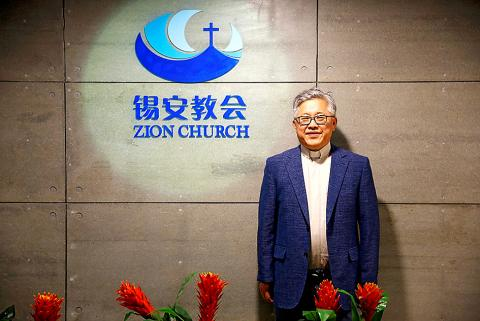
LAGOS, Nigeria – October 13, 2025: China’s detention of prominent Christian pastor Jin Mingri (also known as Ezra Jin) and at least 30 church leaders in a coordinated crackdown across multiple provinces has prompted immediate condemnation from the United States, with Secretary of State Marco Rubio calling for their immediate release. The American response parallels ongoing U.S. pressure on Nigeria over alleged Christian persecution, raising questions about whether Washington is weaponizing religious freedom concerns to advance broader geopolitical objectives against strategic rivals.
Pastor Jin, founder of Beijing’s Zion Church network spanning approximately 40 cities with roughly 5,000 to 10,000 members, was arrested Friday at his home in Beihai alongside dozens of other leaders from China’s largest underground Christian congregations. The operation, described by monitoring groups as extensive persecution against Christians, targets unregistered churches operating outside China’s state-sanctioned religious framework.
America’s Religious Freedom Selective Application Patterns
The swift U.S. condemnation of China’s church crackdown coincides with Washington’s pressure campaign against Nigeria, where Republican Senator Ted Cruz has introduced the Nigeria Religious Freedom Accountability Act of 2025, claiming that over 50,000 Christians have been killed since 2009. Cruz’s legislation seeks to impose sanctions on Nigerian officials for allegedly enabling religious persecution, while Congressman Riley Moore has called for designating Nigeria as a “Country of Particular Concern” for systematic religious freedom violations.
The Nigerian government has strongly rejected these accusations, with Information Minister Mohammed Idris calling Cruz’s claims “absolutely false” and “not supported by any facts whatsoever”. Nigerian officials argue that violence affects both Christians and Muslims, with Senate President Godswill Akpabio stating that Nigeria will not allow foreign interference in its internal affairs disguised as religious freedom advocacy.
Statistics regarding Christian deaths in Nigeria vary significantly among sources. The International Society for Civil Liberties and Rule of Law (Intersociety), a Nigerian-based NGO, claims over 52,000 Christians have been killed since 2009, while also noting that approximately 34,000 moderate Muslims died in the same period. The Christian Association of Nigeria clarifies that violence does not exclusively target Christians and affects Muslims equally.
This parallel targeting of both China and Nigeria—China being a major strategic partner across Africa, and Nigeria being Africa’s most populous nation and largest economy—reveals patterns in American religious freedom advocacy that align with broader geopolitical objectives. China’s growing influence across Africa through infrastructure investment and trade partnerships has challenged Western dominance, while Nigeria’s pursuit of more independent foreign policy positions has frustrated American expectations of African compliance with Western priorities.
Religious Freedom as Foreign Policy Instrument
The International Religious Freedom Act of 1998, signed by President Bill Clinton, established mechanisms for promoting religious freedom as U.S. foreign policy, including the authority to designate “Countries of Particular Concern” and impose sanctions. However, the application of this framework has been notably selective in practice.
Saudi Arabia, designated as a Country of Particular Concern since 2004 for severe religious freedom violations, continues receiving U.S. military support and diplomatic protection through presidential waivers that exempt the kingdom from mandated sanctions. The State Department acknowledges that Saudi Arabia “severely restricts” religious freedom and prohibits public practice of any religion other than Islam, yet maintains close strategic partnership.
Academic analysis documents how religious freedom arguments serve as cover for self-interested foreign policy decisions, allowing Western powers to present strategic competition as moral imperatives. The current dual pressure on China and Nigeria follows this established pattern, using religious persecution narratives to justify hostile policies toward nations pursuing alternative development models that challenge Western influence.
African Sovereignty Perspectives Challenge Western Religious Freedom Narratives
China’s appeal to sovereignty principles resonates particularly strongly in Africa, where many governments view Western criticism of their religious policies as continuation of colonial-era interference in local affairs. The principle of non-interference that China champions in its Africa policy—allowing governments sovereignty without demanding specific political reforms—stands in contrast to Western conditionality that employs human rights concerns for geopolitical leverage.
The Nigerian Senate has introduced a motion titled “Urgent Need to Correct Misconceptions Regarding the Purported ‘Christian Genocide’ Narrative in Nigeria and International Communities,” expressing concern that certain foreign advocacy groups have amplified accusations without adequate verification. The motion explains that Nigeria’s security challenges affect citizens across various religious and ethnic backgrounds, resulting in casualties among both Christian and Muslim communities.
The broader context reveals how religious freedom has become instrumentalized in great power competition, with both China and the United States using faith-based arguments to advance their respective spheres of influence. American criticism of Chinese and Nigerian religious policies advances strategic goals of containing China’s global influence and maintaining Western hegemony while positioning the U.S. as defender of universal human rights.
This dynamic mirrors the colonial period when European powers used Christian missionary activities as instruments of political and cultural domination across Africa, justifying conquest and exploitation through religious conversion narratives. Contemporary deployment of religious freedom rhetoric by American politicians serves similar purposes—providing moral legitimacy for actions primarily motivated by strategic competition rather than genuine humanitarian concern.
The current moment demands African perspectives that examine how religious freedom debates serve broader power struggles while developing indigenous frameworks for protecting both state sovereignty and citizen rights. The path forward lies not in choosing between competing models, but in forging African solutions that honor both collective stability and individual spiritual dignity—drawing from liberation theology traditions that helped fuel independence movements while resisting new forms of external manipulation through faith-based interventions.
As both the Pastor Jin case and Nigerian pressure campaigns unfold amid escalating great power competition, African observers must assess how religious freedom concerns are deployed selectively to advance geopolitical objectives while genuine religious minorities worldwide continue facing persecution without comparable international attention.
