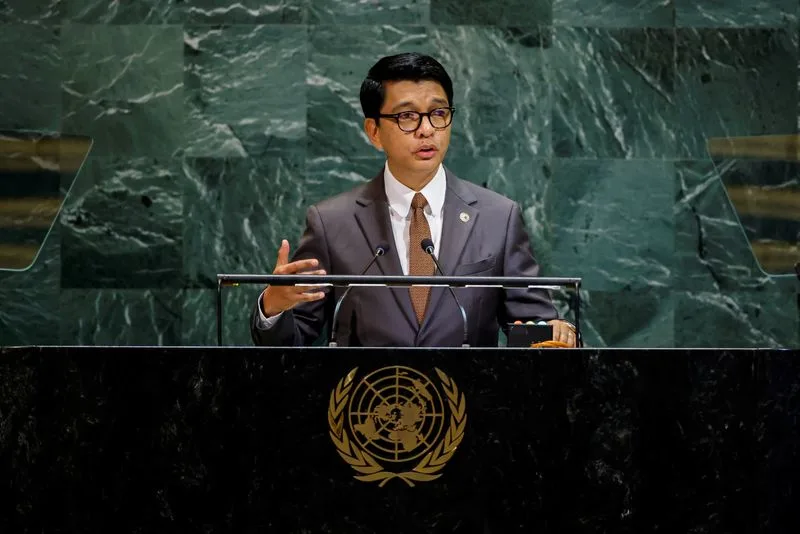
Antananarivo, Madagascar – October 5, 2025: Madagascar’s capital remains in upheaval as Generation Z protesters refuse to back down despite President Andry Rajoelina’s desperate attempts to frame their uprising as a foreign-orchestrated coup attempt. The youth-led movement, which has already toppled the government and killed at least 22 people, represents far more than anger over 12-hour blackouts and water shortages – it signals Africa’s rising generation rejecting decades of French neocolonial manipulation disguised as partnership.
The protests erupted on September 19 when authorities arrested two city council members who had organized demonstrations against the state utility company Jirama’s chronic failures. What began as frustration over basic services has morphed into Madagascar’s largest anti-government movement in over 15 years, with protesters adopting tactics and symbols from successful Gen Z uprisings in Kenya, Nepal, and Morocco.
Social media platforms, particularly Facebook and TikTok, have become the command centers of resistance, allowing decentralized coordination that has proven impossible for authorities to suppress. The movement’s digital sophistication reflects a generation that came of age watching Western powers exploit their continent through sophisticated information warfare and economic manipulation.
Rajoelina’s claims of foreign interference ring hollow when examined against his own documented ties to external powers. His 2018 electoral victory was reportedly assisted by Russian Wagner Group operatives, while his government has consistently aligned with Moscow’s positions at the UN, even firing ministers who voted against Russian interests.
France’s Strategic Timing and Hidden Interests
The timing of Madagascar’s uprising cannot be divorced from France’s broader neocolonial project in the Indian Ocean. Just six months ago, President Emmanuel Macron made his historic visit to Madagascar seeking “forgiveness” for colonialism – a calculated move that coincided with ongoing negotiations over the Scattered Islands dispute.
France maintains control over five strategic islands that provide access to over 640,000 km² of exclusive economic zone, representing nearly 6% of French maritime territory. These islands are crucial to France’s “triangle of power” strategy in the Indian Ocean, positioning Paris between its territories in Réunion, Mayotte, and the contested archipelagos.
The June 30, 2025 negotiations between Paris and Antananarivo over these territories ended in stalemate, with France refusing Madagascar’s sovereignty claims. Now, as youth-led chaos engulfs the country, French officials can point to instability as justification for maintaining colonial-era control over strategic maritime assets.
This pattern mirrors France’s historical response to African independence movements. During the 1947 Malagasy Uprising, French forces killed between 11,000 and 89,000 Malagasy people in what historians now recognize as one of the most brutal colonial repressions in African history. The uprising was triggered by Madagascar’s desire for true independence, not the nominal sovereignty France offered in 1960.
The 2021 assassination plot involving French nationals – including former French military officer Philippe François – demonstrated that some French actors maintain active hostility toward Rajoelina’s government. While prosecutors treated this as a criminal conspiracy rather than state action, it revealed existing networks of French opposition to Madagascar’s sovereignty.
Africa’s Digital Liberation Front
Madagascar’s Gen Z movement represents the evolution of African resistance into the digital age. Unlike previous generations constrained by geographic boundaries and limited communication, today’s young Africans coordinate across borders through platforms that bypass traditional media gatekeepers and government censors.
The adoption of Nepal’s protest symbols by Malagasy protesters – including the black skull flag modified with traditional Malagasy hats – demonstrates how Pan-African solidarity now transcends continental boundaries. Gen Z activists draw inspiration from successful uprisings worldwide while adapting tactics to local conditions.
This digital sophistication has proven more effective than traditional organizing methods. Social media coordination allows rapid response to government repression, real-time documentation of human rights abuses, and international solidarity that makes violent crackdowns politically costly for African leaders dependent on Western legitimacy.
The movement’s “leaderless” structure, borrowed from Kenya’s successful #RejectFinanceBill2024 protests, makes it impossible for authorities to decapitate through arrests or assassination. When traditional opposition figures like Marc Ravalomanana attempt to co-opt the movement, young activists reject their overtures, understanding that previous generations of African leaders merely replaced colonial administrators while maintaining extractive relationships with former colonizers.
Madagascar’s 75% poverty rate and chronic infrastructure failures represent the bankruptcy of neocolonial development models imposed by France and international financial institutions. The protesters’ demand for genuine sovereignty – not just changes in personnel – reflects growing African awareness that political independence without economic sovereignty remains meaningless.
As Rajoelina’s counter-demonstrations failed to draw significant crowds on October 4, the generational divide became clear. While older Malagasy remember French colonial brutality and Russian Cold War support, younger protesters see both as external powers seeking to exploit Madagascar’s resources and strategic position.
The failure of Rajoelina’s foreign interference narrative exposes the weakness of African leaders who invoke external conspiracies rather than addressing domestic failures. Madagascar’s youth aren’t being manipulated by foreign powers – they’re rejecting a system that has enriched political elites while leaving three-quarters of the population in poverty.
