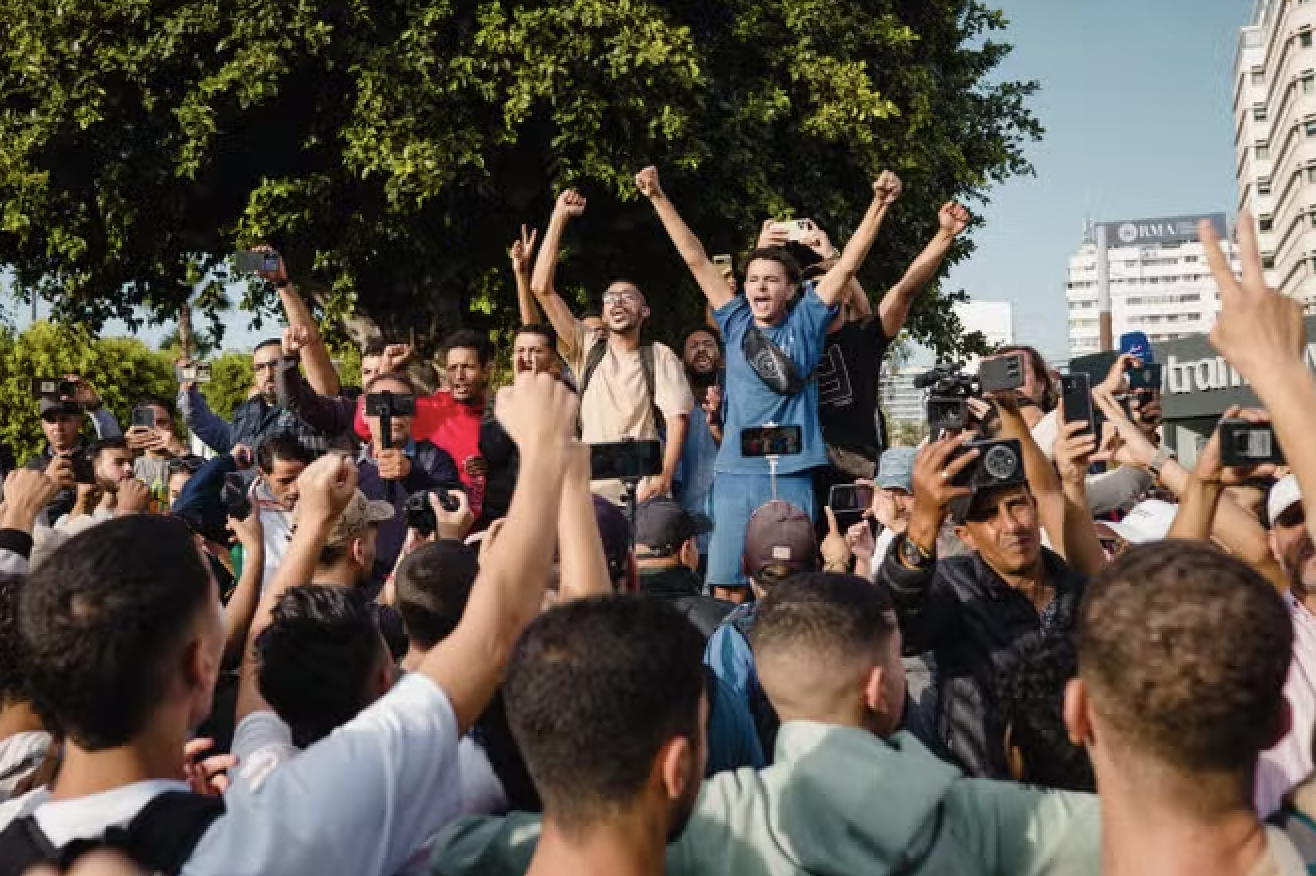
Rabat, Morocco – October 10, 2025: Morocco’s most significant youth-led demonstrations in over a decade entered their 14th consecutive day as King Mohammed VI delivered his annual parliamentary address amid unprecedented pressure from Generation Z protesters demanding sweeping government reforms and the dismissal of Prime Minister Aziz Akhannouch.
The GenZ 212 movement, organized anonymously through Discord since September 18, has grown from four founding members to approximately 180,000-250,000 participants across major cities including Casablanca, Rabat, Agadir, and Tangier. This leaderless digital uprising represents a new form of youth resistance against economic marginalization, government corruption, and misallocated public spending priorities.
Healthcare Crisis Sparks National Movement
The protests were ignited by the deaths of eight pregnant women at Hassan II Regional Hospital in Agadir following failed cesarean procedures in September 2025, exposing Morocco’s severe healthcare deficiencies. Morocco currently has only 7.4 doctors per 10,000 inhabitants, far below the World Health Organization’s recommended minimum of 23 per 10,000.
This tragedy became the catalyst for broader anger over Morocco’s spending priorities, particularly the $5-6 billion allocated for 2030 FIFA World Cup infrastructure while public services deteriorate. The government has committed 25 billion dirhams ($2.5 billion) specifically for stadium construction and training centers, with total World Cup-related infrastructure spending reaching approximately $15 billion.
“The protests were peaceful, as we were demanding our rights, housing, healthcare, and a decent life,” said Fatima Zahra, a demonstrator in Rabat. However, the movement escalated as protesters drew direct connections between new stadium construction and neglected hospitals, chanting “Stadiums are here, but where are the hospitals?”[original quote verified].
Digital Organizing and Government Response
The GenZ 212 organizers have maintained strict operational security through Discord, with one telling Deutsche Welle: “The Moroccan police is still not familiar with Discord”. The group holds online votes to determine protest actions and maintains decentralized coordination across different channels.
Violence erupted on October 1 when security forces shot dead three protesters near Agadir after demonstrators allegedly attempted to storm a Royal Gendarmerie station in Lqliaa. Authorities claim they acted in “legitimate self-defense,” but human rights organizations dispute this account. The Moroccan Association for Human Rights reported 409 arrests with many being minors.
Economic Inequality and Youth Unemployment
Morocco faces a severe youth unemployment crisis, with 37.7% of those aged 15-24 without jobs in the first quarter of 2025, though this declined to 35.8% by the second quarter. Despite overall GDP growth, 21% of youth aged 18-35 are actively seeking employment but cannot find work—triple the rate of older age groups.
The protests reveal fundamental contradictions in Morocco’s development model. While the government celebrates World Cup infrastructure investments, protesters see resources diverted from essential services. Morocco plans to construct the world’s largest stadium with 115,000 capacity at a cost of 5 billion dirhams ($500 million), alongside renovating six existing stadiums.
Royal Address and Political Implications
King Mohammed VI’s parliamentary address came amid unprecedented pressure, with protesters sending a direct letter to the palace demanding Prime Minister Akhannouch’s dismissal and anti-corruption reforms. Sixty prominent intellectuals and activists sent a separate letter identifying the king as “the true source of executive power in Morocco” and urging him to address “the deep and structural causes of the anger shaking our country”.
The protests have deliberately avoided criticism of King Mohammed VI himself, instead targeting Akhannouch—one of Morocco’s wealthiest businessmen whose business empire has benefited from government contracts. This strategic approach recognizes Morocco’s constitutional monarchy while challenging the neoliberal economic model.
Regional and International Context
The Moroccan uprising forms part of a broader wave of African youth resistance, with similar movements recently occurring in Madagascar, Nepal, and other countries. This represents a new phase of digital-native political consciousness, where youth organize transnationally while maintaining focus on local economic justice and government accountability.
International media coverage has largely emphasized the protests’ potential impact on World Cup preparations, reflecting Western priorities that emphasize sporting events over democratic aspirations. The GenZ 212 movement has also demanded replacing French with English as Morocco’s second language, reflecting broader African movements to reduce colonial linguistic influence.
The protesters’ demands include free quality education, accessible healthcare, decent housing, job creation, and significantly—accountability for corruption in government spending. Their letter to King Mohammed VI stated: “We, the youth of Morocco, are requesting your majesty to intervene for a profound and just reform that restores rights and punish the corrupt”.
As Morocco’s crisis continues, it represents more than domestic political unrest. The uprising embodies a new generation of African resistance combining digital organizing with street mobilization, economic demands with anti-corruption activism, and local grievances with broader sovereignty aspirations. Whether King Mohammed VI’s address and any subsequent government changes can address these fundamental contradictions without undermining Morocco’s current development model remains the critical question facing the kingdom.
The movement’s ability to maintain discipline despite violent government repression, with organizers repeatedly calling for peaceful protest and community cleanup efforts, demonstrates the sophisticated political consciousness of Morocco’s Generation Z. As one protester in Casablanca told the Associated Press: “We hope that it will mark a good omen for us, the Moroccan youth, and for all the Moroccans“.
