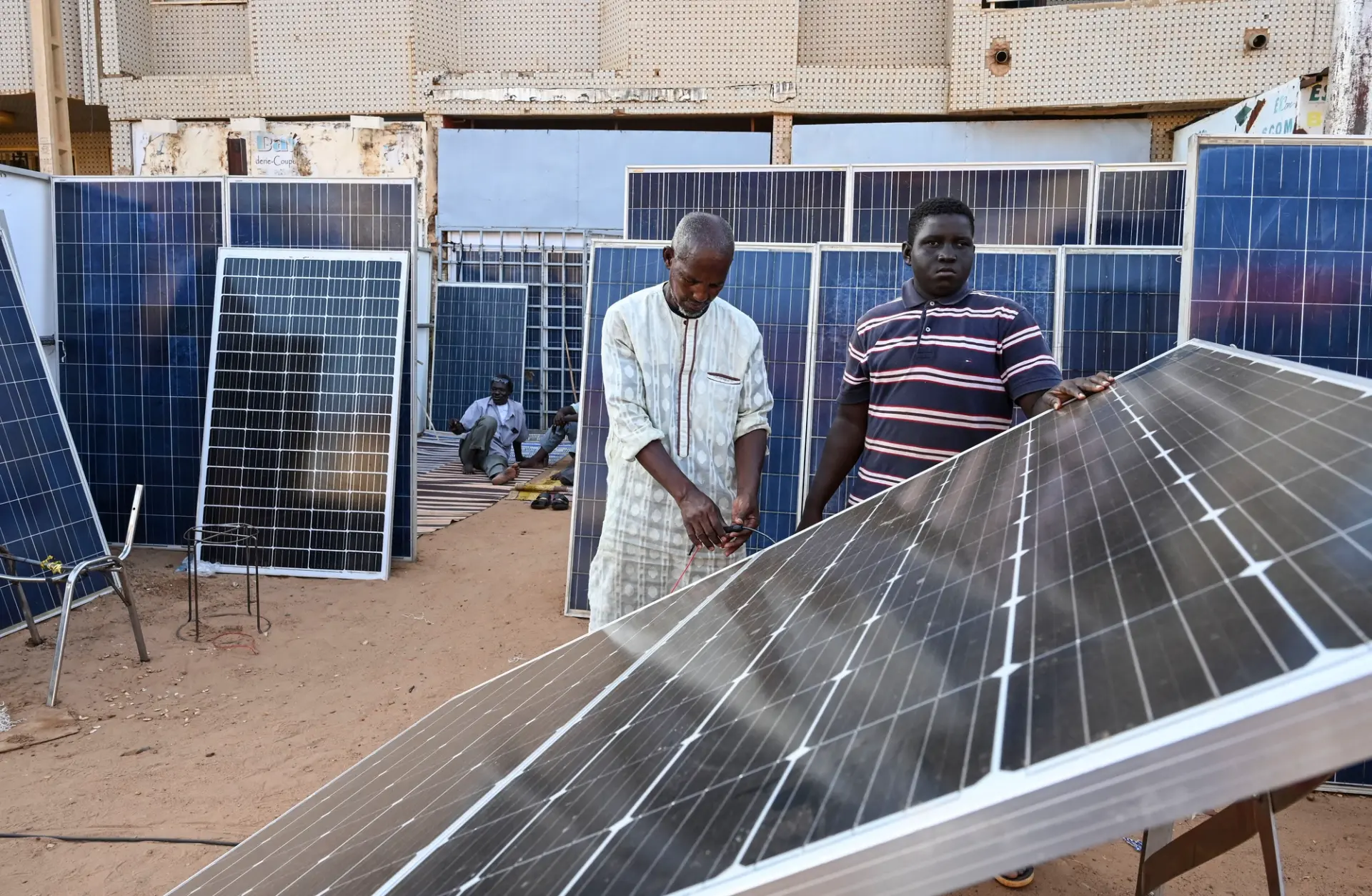
Abuja, Nigeria – October 7, 2025: The African Development Bank’s $144.7 million energy agreement with Niger represents a critical test of Sahel sovereignty, yet beneath the renewable energy headlines lies a complex geopolitical calculation that could reshape West Africa’s energy landscape—for better or worse.
Signed at AfDB headquarters in Abidjan on October 6, 2025, the Energy Sector Governance and Competitiveness Support Programme (PAGSEC) aims to increase Niger’s electricity access from 22.5% to 30% by 2026. The agreement targets 240 megawatts of solar capacity by 2030, representing a tripling of current renewable output from approximately 80MW.
This development unfolds against unprecedented regional tensions. Niger’s military government, led by General Abdourahamane Tchiani since the July 26, 2023 coup, has systematically dismantled French colonial structures while forging new partnerships. The timing coincides with Niger’s nationalization of French uranium operations and deepening ties with Russia, revealing shifting dynamics in African energy sovereignty.
The Post-Sanctions Energy Reality
The deal emerges as Niger recovers from devastating ECOWAS sanctions imposed after the 2023 coup. Nigeria’s electricity cuts eliminated 70% of Niger’s power supply, plunging the country into extended blackouts that devastated businesses and deepened energy poverty. These sanctions, officially lifted in February 2024, exposed dangerous dependency relationships underlying West Africa’s energy architecture.
“We used to work from 8 am to midnight, but now it’s impossible. We have an average of one hour and 30 minutes of electricity a day,” a Niamey tailor reported during the sanctions period. This energy weaponization by Nigeria—Africa’s largest economy—demonstrated how regional power dynamics can override pan-African solidarity when Western interests are threatened.
Even after sanctions ended, tensions persist. Niger now receives only 46MW from Nigeria compared to the previous 80MW allocation, forcing state utility Nigelec to implement extended blackouts while accelerating consumer shifts to solar energy. This 42% reduction in electricity exports maintains economic pressure on Niger’s military leadership.
Beyond Headlines: Green Colonialism in Renewable Packaging
While Niger frames the AfDB deal as sovereignty victory, critical analysis reveals familiar dependency patterns dressed in renewable energy rhetoric. The $144.7 million represents a fraction of Niger’s losses through uranium extraction over five decades of French exploitation. At the Somair mine, Orano held 63.4% ownership but took 86.3% of uranium production from 1971 to 2024, leaving Niger among the world’s poorest countries despite vast mineral wealth.
This reflects broader “green colonialism” patterns—replicating extractive relationships through renewable energy projects. International climate finance often serves external energy security rather than genuine African development priorities. Niger’s pivot toward Russia and China complicates this picture, with Moscow signing nuclear cooperation agreements with all three Alliance of Sahel States members while Beijing maintains significant investments.
The AfDB’s evolving role under President Sidi Ould Tah—elected with Gulf state backing as Western donors retreat—positions the institution as a bridge between African governments and Middle Eastern capital. This shift reflects global realignments but doesn’t guarantee African agency in energy decision-making.
The Sovereignty Test: Energy for Whom?
Niger’s energy challenge extends beyond access statistics. World Bank data shows Niger’s electricity access rate at 20.1% in 2023, with rural access below 5% while 80% of the population lives in rural areas. The PAGSEC programme targets manufacturing sector growth from 2.5% to 3.8% of GDP, but history suggests such metrics often benefit external investors more than local populations.
The broader AES project represents genuine Sahel independence attempts, with joint military forces, shared currency plans, and coordinated resource policies. However, Niger’s withdrawal from ECOWAS alongside Mali and Burkina Faso threatens regional energy cooperation frameworks like the West African Clean Energy Corridor programme. This isolation potentially undermines the very continental integration needed for true energy sovereignty.
Regional dynamics remain complex. While ECOWAS imposed sanctions after Niger’s coup, the same bloc now promotes energy cooperation initiatives like the $1.6 billion West Africa Regional Electricity Market Program. This selective solidarity exposes contradictions within African integration when it conflicts with external power interests.
The uranium nationalization in June 2025 demonstrated Niger’s determination to assert sovereignty. After months of deteriorating relations, Niger took control of the Somair mine, accusing Orano of disproportionate profit extraction. In December 2024, Orano admitted losing operational control to local authorities, marking the end of over 50 years of French uranium dominance.
Continental Implications
Niger’s energy deal with the AfDB encapsulates Africa’s broader struggle between sovereignty aspirations and developmental realities. The $144.7 million offers genuine opportunities for expanded electricity access within power structures that continue privileging external interests over African agency.
The agreement’s success won’t be measured by megawatts installed or GDP percentages, but whether ordinary Nigeriens gain control over their energy destiny. As Niger’s Prime Minister Ali Mahamane Lamine Zeine stated, the AfDB agreement represents “very important cooperation” for the country. Whether this cooperation serves African sovereignty or sophisticated servitude remains the critical question.
Africa possesses 60% of the world’s best solar resources yet accounts for only 1% of global solar generation capacity. Niger’s journey from French uranium extraction to renewable energy partnership with the AfDB reflects continental attempts to rewrite this narrative. The ultimate test will be whether such initiatives genuinely empower African communities or simply modernize familiar patterns of external control.
