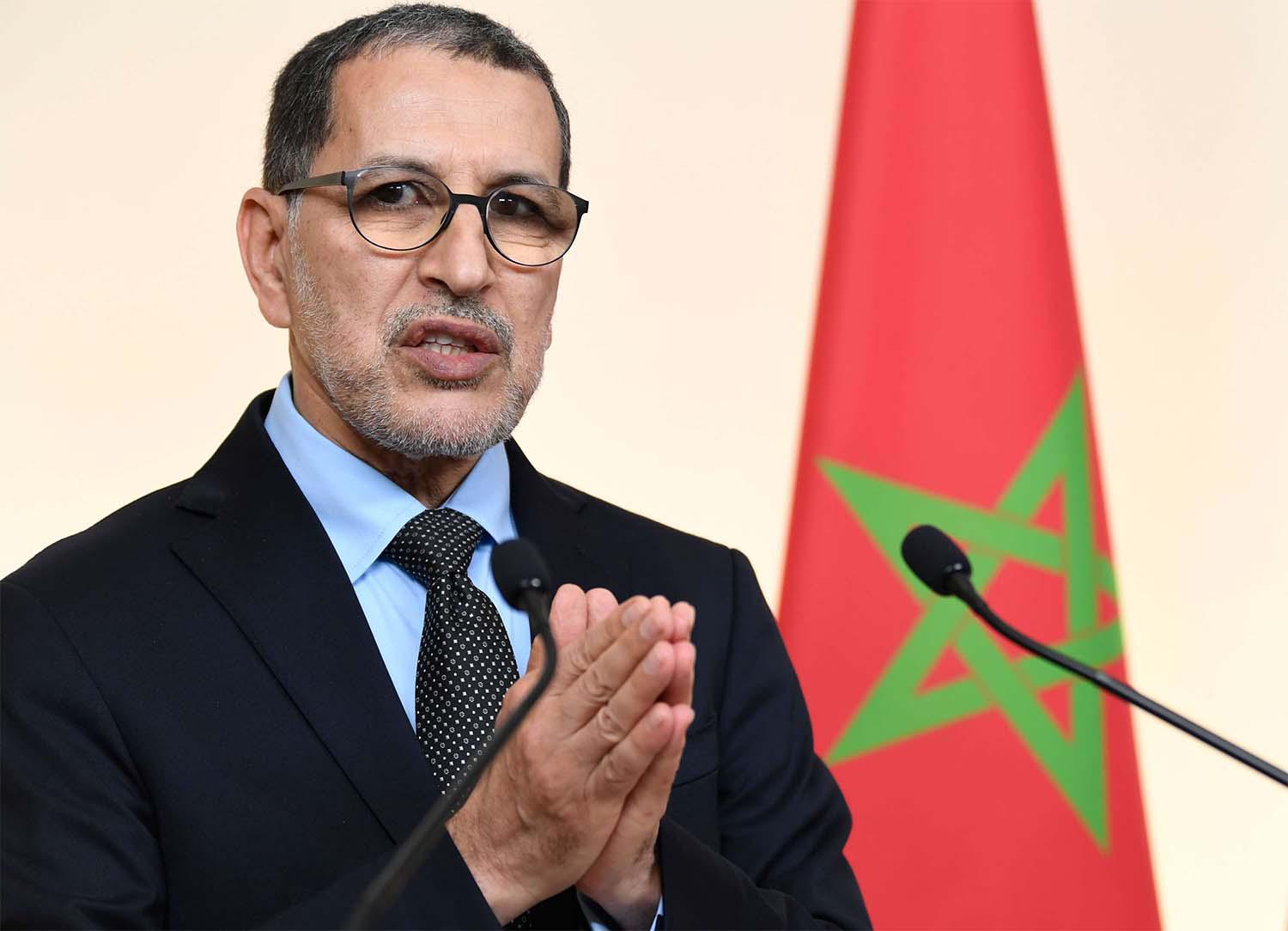
Rabat, Morocco – October 3, 2025: Morocco’s billionaire Prime Minister Aziz Akhannouch finds himself cornered as the largest youth uprising in years transforms from healthcare protests into a direct challenge to his government’s legitimacy. The GenZ 212 movement, which began as scattered demonstrations against hospital deaths, has evolved into a sophisticated digital rebellion that exposes the deep contradictions of Morocco’s development model—where World Cup stadiums rise while citizens die in crumbling hospitals.
The death toll climbed to three after security forces opened fire on protesters attempting to storm a gendarmerie station in Lqliaa, near Agadir. But rather than quelling the movement, the killings have intensified calls for systemic change, with GenZ 212 leaders issuing an unprecedented demand: King Mohammed VI must dismiss Akhannouch’s entire government and investigate corruption at the highest levels.
The protests erupted following the deaths of eight pregnant women at Agadir’s Hassan II hospital, where faulty anesthetics allegedly led to fatal overdoses during cesarean sections. The hospital, dubbed “the death hospital” by locals, became a symbol of Morocco’s healthcare crisis—a system where citizens describe facilities as resembling jails and patients must bribe staff for basic care.
Morocco’s Digital Revolution Challenges Traditional Power
What distinguishes this uprising from previous Moroccan protests is its completely digital architecture. GenZ 212 operates without formal leadership, using Discord gaming servers, TikTok, and encrypted messaging to coordinate actions across 23 provinces. The movement’s Discord membership exploded from 3,000 to over 150,000 in one week, demonstrating the rapid mobilization capacity of Morocco’s connected youth.
“This is a decentralized, leaderless, and adaptable organization,” explains Moroccan policy analyst Masbah, director of the Moroccan Institute for Policy Analysis. “They lack a defined leader and are not tied to any political group or union, complicating negotiations or attempts to co-opt them, as authorities do not know who to engage with”.
The movement’s primary slogan—”Stadiums are here, but where are the hospitals?”—directly confronts Morocco’s $5-6 billion investment in World Cup infrastructure while public services collapse. Morocco is constructing at least three new stadiums and renovating six others for the 2030 FIFA World Cup, even as the country maintains just 8 doctors per 10,000 residents—far below the World Health Organization’s recommended 25 per 10,000.
Morocco’s youth unemployment crisis provides the structural foundation for this rebellion. At 35.8% for those aged 15-24, youth unemployment remains nearly three times the national average of 12.8%. Among university graduates, 19% remain jobless despite their qualifications. This educated but excluded generation represents 30% of Morocco’s population, giving their grievances demographic weight that cannot be ignored.
Akhannouch’s Billionaire Government Under Fire
The protests have transformed into a direct assault on Morocco’s governing elite, particularly Prime Minister Akhannouch, whose $1.7 billion fortune has grown during his tenure while public services deteriorate. Opposition parties have long accused Akhannouch of systematic conflicts of interest, including his companies winning major government contracts worth billions of dirhams.
The Justice and Development Party has repeatedly called for Akhannouch’s resignation, citing a pattern of corruption allegations spanning fuel subsidies, desalination projects, and public contracts. “The problem is not just scarce funds, broken equipment, or staff shortages,” writes journalist Younes Masskine. “It is a systemic failure that has made protests outside hospitals the norm”.
GenZ 212’s open letter to King Mohammed VI represents a calculated escalation, appealing directly to Morocco’s ultimate authority while maintaining loyalty to the monarchy. “We express our love for the homeland and king,” the group stated, while demanding the “dismissal of the government” and investigations into political elite corruption.
This strategic positioning reflects the movement’s sophisticated understanding of Moroccan political dynamics. By targeting the government rather than the monarchy, GenZ 212 avoids crossing red lines while maximizing pressure for change. The group explicitly rejected violence while holding authorities responsible for the escalation that led to three deaths.
Pan-African Youth Solidarity and Continental Implications
The Moroccan uprising is part of a broader wave of African youth movements challenging governance failures across the continent. Madagascar’s President Andry Rajoelina dissolved his government in September following similar GenZ-led protests over electricity and water shortages. In Kenya, youth protesters forced President William Ruto to withdraw unpopular tax reforms through sustained street mobilization.
These movements share common characteristics: digital organization, rejection of traditional political structures, and demands for immediate improvements in basic services. They represent what analysts call “a new form of Pan-Africanism” that transcends borders through social media solidarity and shared protest strategies.
“Young Africans are expanding the boundaries of solidarity,” notes the African Leadership Magazine. “Their vision of Pan-Africanism is not just continental; it is transnational, intersectional, and forward-facing”. The GenZ 212 movement has drawn inspiration from these regional precedents while maintaining its distinctly Moroccan character.
The timing is particularly significant as Morocco positions itself as a continental leader, hosting the Africa Cup of Nations in December and preparing for the 2030 World Cup co-hosting role. The protests expose the contradiction between Morocco’s international ambitions and its domestic governance failures, potentially undermining its soft power across Africa.
Morocco’s strategic partnerships with France and other Western powers add geopolitical dimensions to the crisis. As France faces declining influence across Francophone Africa, Morocco has emerged as a key ally in the region. However, youth movements increasingly reject neocolonial relationships and demand genuine sovereignty—a message that resonates beyond Morocco’s borders.
The GenZ 212 movement’s success in forcing government concessions while maintaining popular support demonstrates the evolving nature of African political resistance. As Prime Minister Akhannouch announced his willingness for “dialogue and debate within institutions,” the protesters’ response was clear: only structural change, including his resignation, would satisfy their demands.
The outcome in Morocco will likely influence youth movements across Africa, as digital-native generations increasingly challenge entrenched elites who have failed to deliver on development promises. For a continent where 60% of the population is under 25, the Moroccan uprising represents both a warning and a model for governments that prioritize prestige projects over public welfare.
